

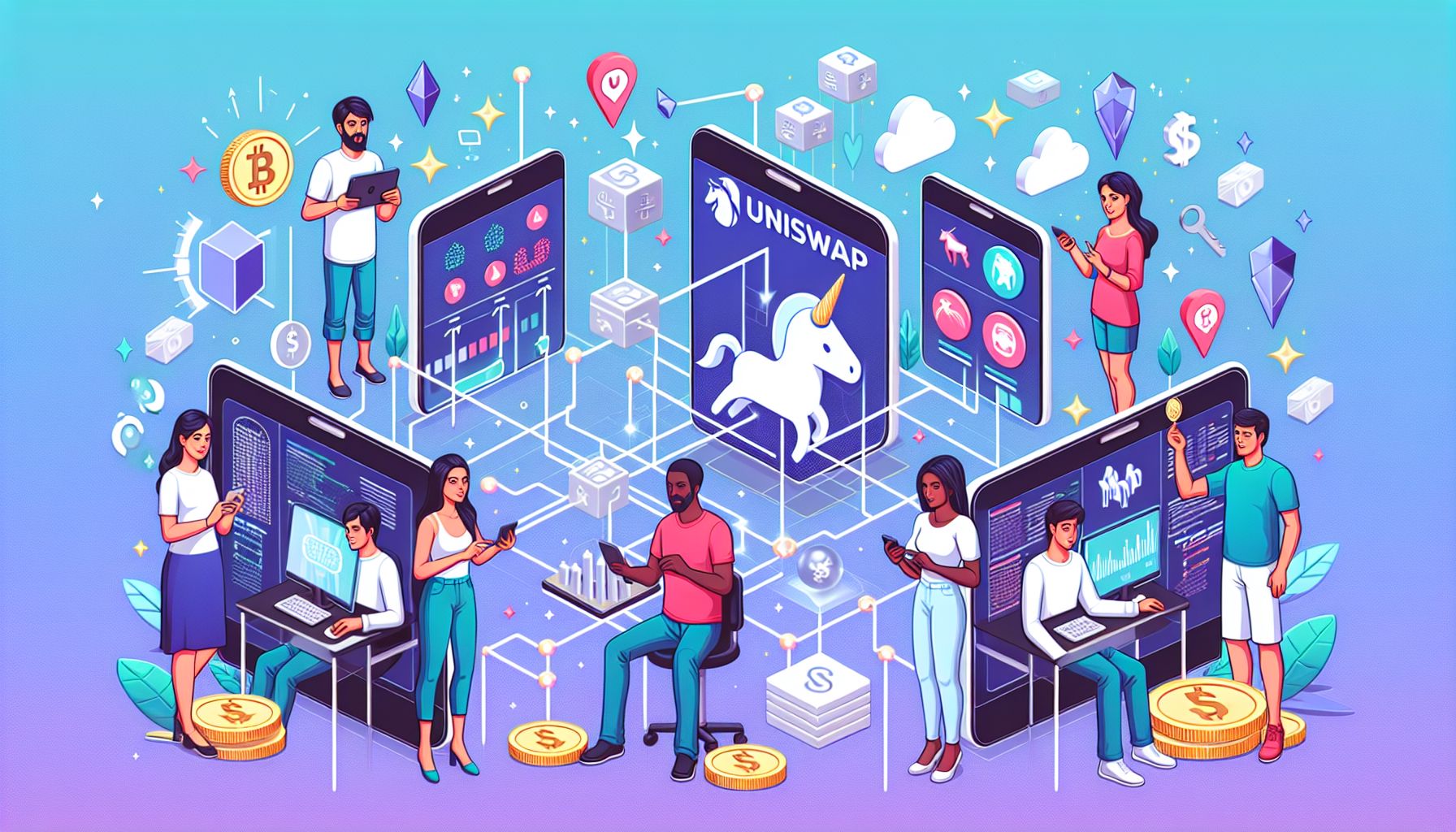
DeFi or Decentralized Finance is a blockchain-based form of finance that does not rely on central financial intermediaries such as brokerages, exchanges, or banks to offer traditional financial instruments. One such robust DeFi ecosystem offering unrivaled liquidity options is Uniswap.
Exploring Uniswap
Uniswap is an Ethereum-based exchange protocol that allows anyone with an Ethereum wallet to swap ERC20 tokens directly from their wallet app. It revolutionizes the traditional exchange model, eliminating the need for intermediaries and thus reducing costs and barriers to entry. Also, it helps bypass the issue of illiquidity in less popular tokens which commonly plagues decentralized exchanges.
Uniswap operates using two major components – an automated liquidity protocol and a decentralized exchange where swaps take place. Unlike traditional exchanges, Uniswap matches buyers and sellers automatically using a mathematical equation that is pre-set in each pool’s contract. This dynamic functionality ensures liquidity remains constant at all times connected to the size of the token reserves and the current market prices.
The Game Changer
Uniswap has been the frontrunner on many fronts in the DeFi space, notably for its innovative model of liquidity provision. Users can become liquidity providers by investing an equivalent value of two tokens, thereby earning passive income from fees paid by traders that use the liquidity pool. This permissionless approach to liquidity provisioning effectively creates a financial market that is entirely decentralized and resistant to censorship.
Moreover, Uniswap introduced governance tokens (UNI) giving holders the power to make decisions about the platform’s future. This includes decisions about the protocol fee switch functionality and how the treasury is managed.
Assessing the Risks and Rewards
While Uniswap has plenty of advantages, it is crucial to consider its risks too like impermanent loss. Impermanent loss can occur when the market price of the tokens deviates in any direction from the price at the time of deposit. If severe, it can exceed possible earnings from the Liquidity Provider fees thereby, prompting careful consideration before investments.
Despite the risks, the rewards can be great. For instance, when Uniswap introduced its governance token, they rewarded past users with a generous airdrop, some receiving tokens worth a few thousand dollars at current prices.
Conclusion
In short, Uniswap is an innovative protocol that gives power back to the community by democratizing and decentralizing finance. It showcases how blockchain technology can effectively disintermediate incumbent financial systems thereby opening up new possibilities for inclusion and fairer distribution of resources. However, as with any investment, it demands thorough analysis that encompasses a careful assessment of all associated risks and rewards.