

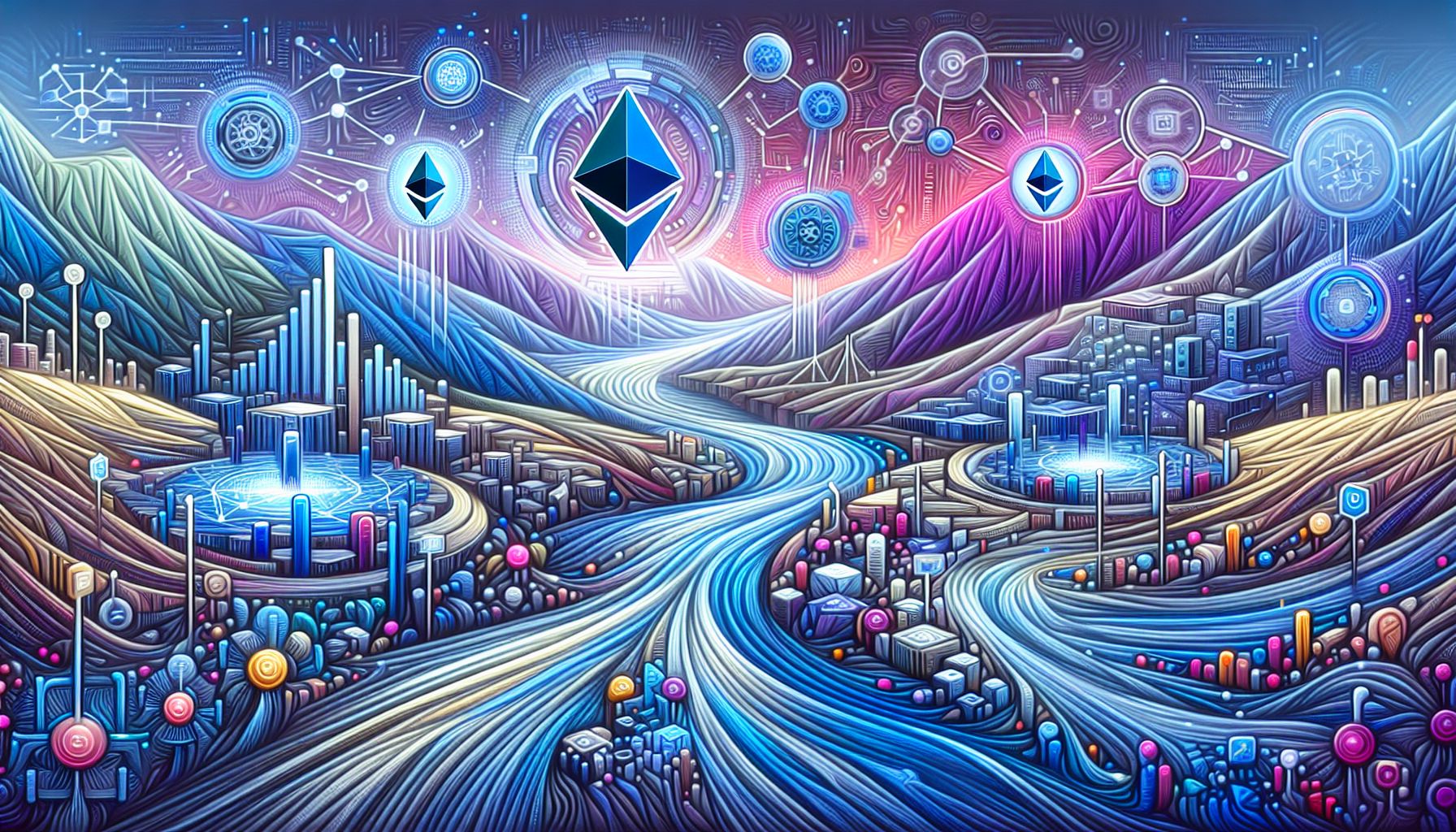
Welcome to the world of decentralised finance (DeFi), a recent blockchain evolution that offers a fresh and innovative approach to manage finance. One DeFi ecosystem that stands out from the rest by virtue of its innovation, inclusive ethos, and vast potential is Ethereum.
Introduction
Ethereum — the decentralized platform that made the concepts of smart contracts and dApps a reality. This DeFi ecosystem, born in 2015, offers a platform over which users can build decentralized applications on its blockchain. What sets Ethereum apart is not its ability to eliminate intermediaries or its commitment to transparency alone, but its profound potential to democratize finance.
The Body: Ethereum and the Art of Decentralization
Ethereum’s DeFi ecosystem is powered by its native cryptocurrency – Ether. However, Ethereum’s potential extends beyond being just another cryptocurrency. It provides an open-access environment allowing anyone, anywhere across the globe, to build and deploy smart contracts and dApps — thereby developing a whole new level of financial technologies.
The core pillar of Ethereum’s DeFi landscape is its smart contracts. These self-executing contracts have terms of agreement written directly into lines of code, eliminating the need for a middleman. Executed over Ethereum’s blockchain, these smart contracts ensure complete transparency, security, and swift settlements of transactions.
A prominent application of these smart contracts in the Ethereum DeFi ecosystem is dApps. From lending platforms, decentralized exchanges, to prediction markets – dApps encapsulate all. A significant example is MakerDAO, an Ethereum-based dApp that has revolutionized borrowing and stability in the cryptocurrency world by enabling the generation of Dai, a stable coin pegged against the US dollar.
Furthermore, Ethereum’s DeFi ecosystem embraces composability or “money legos” concept. Every DeFi project built on Ethereum can interact with each other, creating an interconnected, integrated financial system. Such interoperability enhances versatility and triggers the creation of complex financial instruments.
Conclusion: A Step Into the Future or a Leap Into the Unknown?
Ethereum’s potential in democratizing finance cannot be understated. However, it is essential to note that with its relatively nascent stage, risks in the Ethereum DeFi space are inherently high. Smart contracts, despite their benefits, still have the potential to be exploited if not thoroughly audited. The high volatility of the crypto market amplifies the risk.
However, Ethereum is evolving fast, and so is its DeFi ecosystem. Ethereum 2.0, the much-awaited upgrade, is poised to address many current issues like scalability and security, promising an exciting future.
In a relatively short time, Ethereum has paved the way for a multitude of DeFi innovations. It has changed how we perceive finance, making it more transparent, efficient, and accessible.
In summary, Ethereum’s DeFi ecosystem is an exhilarating landscape of decentralized finance. It offers incredible potential, propels financial innovation and inclusivity. Nevertheless, with its associated risks, Ethereum stands as a vivid testament to the duality of the crypto space — a step into the future or a leap into the unknown. The verdict lies with the user’s ability to harness its potential and manage associated risks.
Financial notice (as of 16.10.2026): this article is general information, not financial, investment, tax, or legal advice. Crypto-assets are high risk: you can lose some or all of your money. Rules and products change; always check the official source and, if needed, ask an independent adviser.
Investment risk (as of 16.10.2026): past performance does not predict future results. No return is promised or guaranteed. Do not invest money you cannot afford to lose, and do not invest borrowed money.