

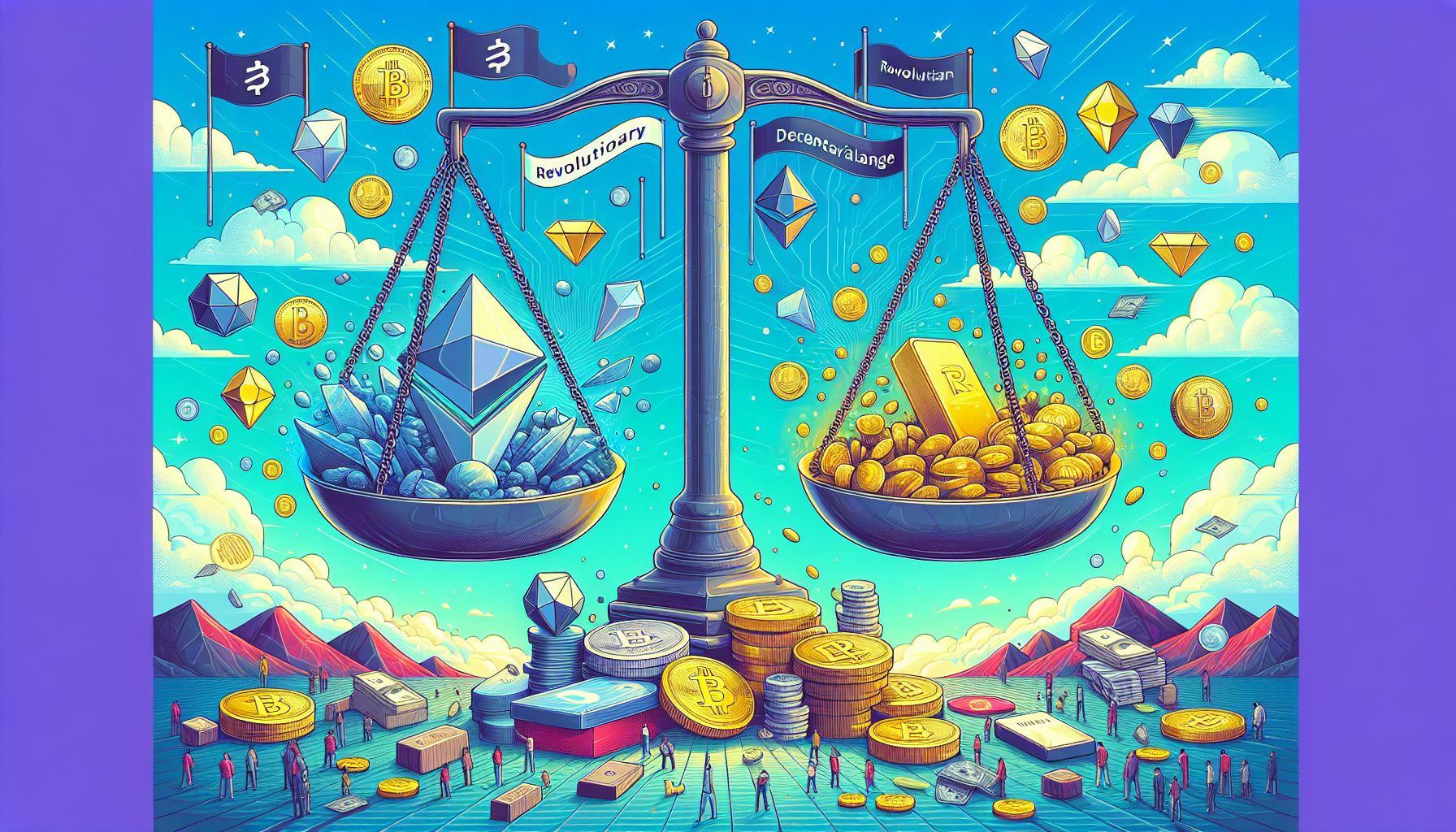
In the recent past, the emergence of blockchain technology has led to a whirlwind of changes in the world of finance. One evolution has been the introduction of decentralized finance (DeFi) which has given birth to numerous platforms. Today we focus on an integral part of the DeFi landscape, Uniswap, a decentralized exchange protocol built on the Ethereum blockchain.
What is Uniswap?
Uniswap is a fully decentralized protocol for automated liquidity provision on Ethereum. It is an open-source software designed for swapping ERC-20 tokens from an Ethereum wallet without relying on order books. Instead, trades are executed directly with smart contracts on the Ethereum blockchain. This endows Uniswap with an increased level of decentralization, transparency, and security compared to traditional exchanges.
Uniswap’s Core Features
Uniswap operates on two core elements: liquidity pools and an automated market making (AMM) system. In the liquidity pools, users pool their assets to create a market that is later used by traders. These liquidity providers earn fees generated by the trading activity. On the other hand, the AMM enables traders to trade directly with the smart contract. This structure allows anyone with an Internet connection to start trading, providing financial services globally without discrimination.
Moreover, the Uniswap protocol allows for the creation of any pair of ERC20 tokens leading to a high level of inclusivity even for smaller projects. Furthermore, Uniswap utilizes the highly decentralized native UNI token for governance of the protocol, enabling collective decision-making.
Impact of Uniswap on DeFi
Uniswap’s AMM model has been influential in DeFi, leading to the adoption of similar models across other platforms. The project has also embarked on constant innovation, with a recent third iteration introducing concentrated liquidity provision, among other features. This ability to continuously evolve contributes to Uniswap’s position as one of the key building blocks of the Ethereum DeFi ecosystem.
Uniswap has also contributed to the wider DeFi goal of democratizing finance. By allowing anyone to become a liquidity provider or to trade, Uniswap eliminates many of traditional banking’s limitations and exclusivities.
Conclusion
In summary, Uniswap stands out as a trailblazer in the DeFi ecosystem. It goes beyond being just a decentralized exchange, providing a platform for the seamless exchange of assets, novelty pools, automatic market-making, and collective governance. As more users join blockchain networks and interact with DeFi, Uniswap is poised to play a significant role in this expanding monetary frontier.
In the larger scheme of things, Uniswap proves that decentralized technologies do hold the potential to democratize access to financial services. As it continues to evolve and innovate, who knows what other financial revolutions this remarkable protocol could spark in the future?
Financial notice (as of 16.10.2026): this article is general information, not financial, investment, tax, or legal advice. Crypto-assets are high risk: you can lose some or all of your money. Rules and products change; always check the official source and, if needed, ask an independent adviser.
Investment risk (as of 16.10.2026): past performance does not predict future results. No return is promised or guaranteed. Do not invest money you cannot afford to lose, and do not invest borrowed money.