

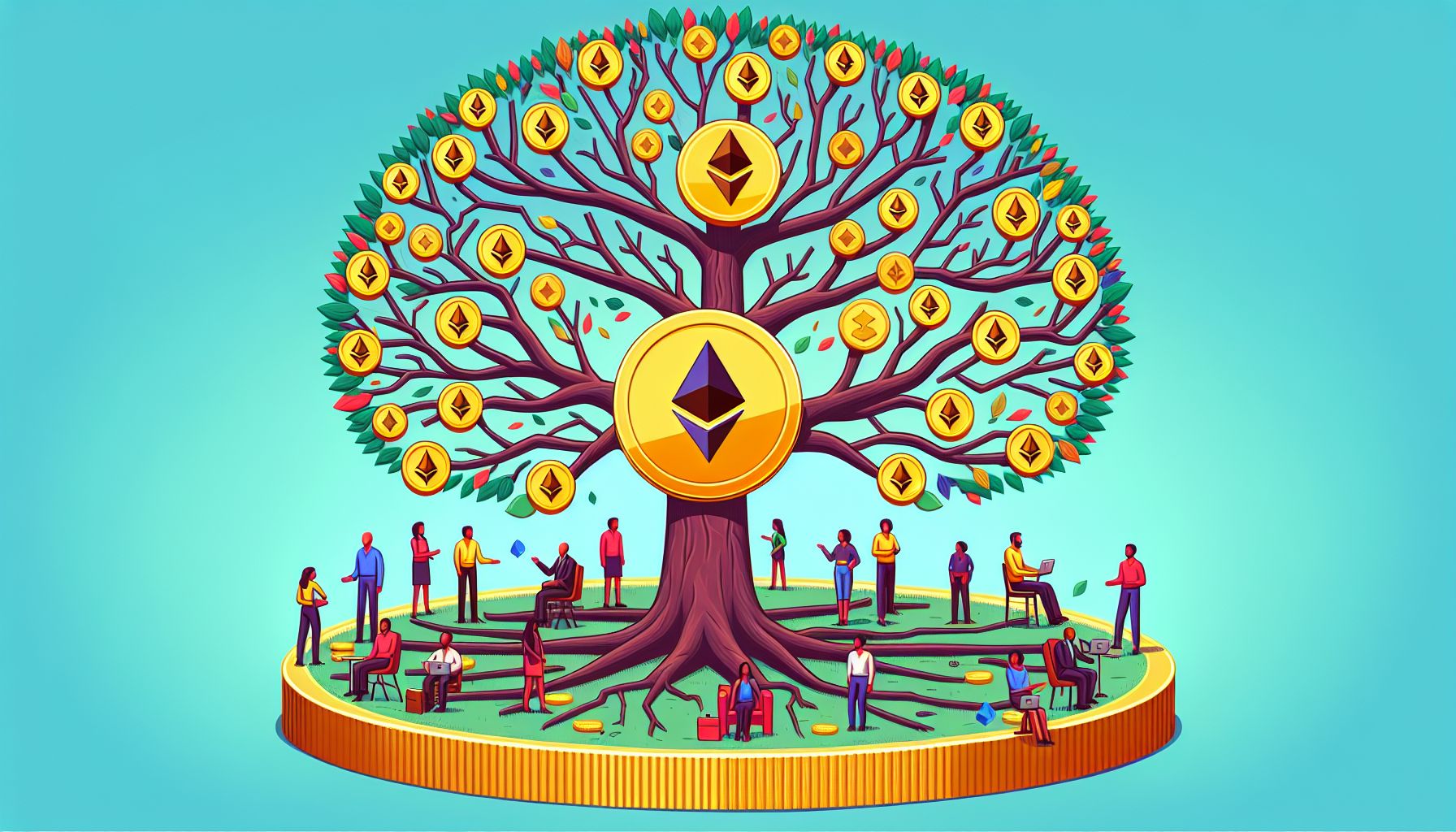
In our growing digital age, the financial ecosystem is rapidly evolving. Decentralization is at the heart of this radical change, empowering digital transactions to break free from traditional central authorities. This blog post explores the workings of one of the most prominent and successful DeFi (Decentralised Finance) ecosystems today, Ethereum.
Introduction
Ethereum is more than just a cryptocurrency; it’s an open-source, blockchain-based platform that allows developers to build and deploy decentralized applications (dApps) on its network. Smart Contracts, the central pillar of Ethereum, enables the creation of programmable money and digital assets, setting the stage for a realm of decentralized finance (DeFi).
Body
What is Ethereum DeFi?
Ethereum DeFi represents an umbrella term for financial applications in the cryptocurrency space built on top of Ethereum. It encompasses a broad array of dApps, including decentralized exchanges (dexes), lending and borrowing platforms, prediction markets, and stablecoins.
How does it work?
DeFi on Ethereum works leveraging smart contracts, self-executing agreements with the terms of the agreement directly written into code lines. These predetermined rules automate transactions without any need for an intermediary, enabling users to interact with the Ethereum blockchain freely and securely.
Key Components of Ethereum DeFi
Decentralized Exchanges
Decentralized Exchanges, or DEXes, are pivotal components of Ethereum DeFi. They enable direct peer-to-peer trades within the Ethereum ecosystem, ensuring security, privacy, and control over the trades. Notable DEXes include Uniswap, Balancer, and Curve Finance.
Lending and Borrowing Platforms
DeFi applications like Compound and Aave offer a unique lending and borrowing system unlike traditional finance. With no need for credit checks or complex paperwork, these platforms let users lend and borrow assets with ease, earning or paying interests in a decentralized way.
Stablecoins
Stablecoins like DAI and USDT, due to their stability, act as comparative safe havens in the volatile crypto space. They play a significant role in the DeFi space, enabling investors to hedge against severe market fluctuations.
Yield Farming and Liquidity Mining
Techniques such as Yield Farming and Liquidity Mining encourage users to provide liquidity to DeFi platforms. Users earn rewards in return, generating more yield from their crypto assets.
Conclusion
Ethereum DeFi is a groundbreaking innovation, challenging the traditional financial norms with its decentralized nature. It provides anyone, anywhere, the freedom to handle their finances without intermediaries, potentially spearheading a new era of economic freedom and transparency.
Emerging use-cases and continuous development keep Ethereum DeFi firmly at the forefront of the crypto universe. The future looks quite promising, though much will depend on further developments, regulations, and user adaptation.
The dynamic Ethereum DeFi space needs to keep evolving and revolving around its users. With time, patience, and necessary adjustments, Ethereum DeFi and similar projects can revolutionize our perception and approach to finance.
Completing this journey, Ethereum can bring to life the prophetic words of Friedrich Hayek, “I don’t believe we shall ever have good money again before we take the thing out of the hands of the government, that is, we can’t take it violently out of the hands of the government; all we can do is by some sly roundabout way introduce something they can’t stop.” Ethereum DeFi seems to be that “something.”
Financial notice (as of 16.10.2026): this article is general information, not financial, investment, tax, or legal advice. Crypto-assets are high risk: you can lose some or all of your money. Rules and products change; always check the official source and, if needed, ask an independent adviser.
Investment risk (as of 16.10.2026): past performance does not predict future results. No return is promised or guaranteed. Do not invest money you cannot afford to lose, and do not invest borrowed money.