

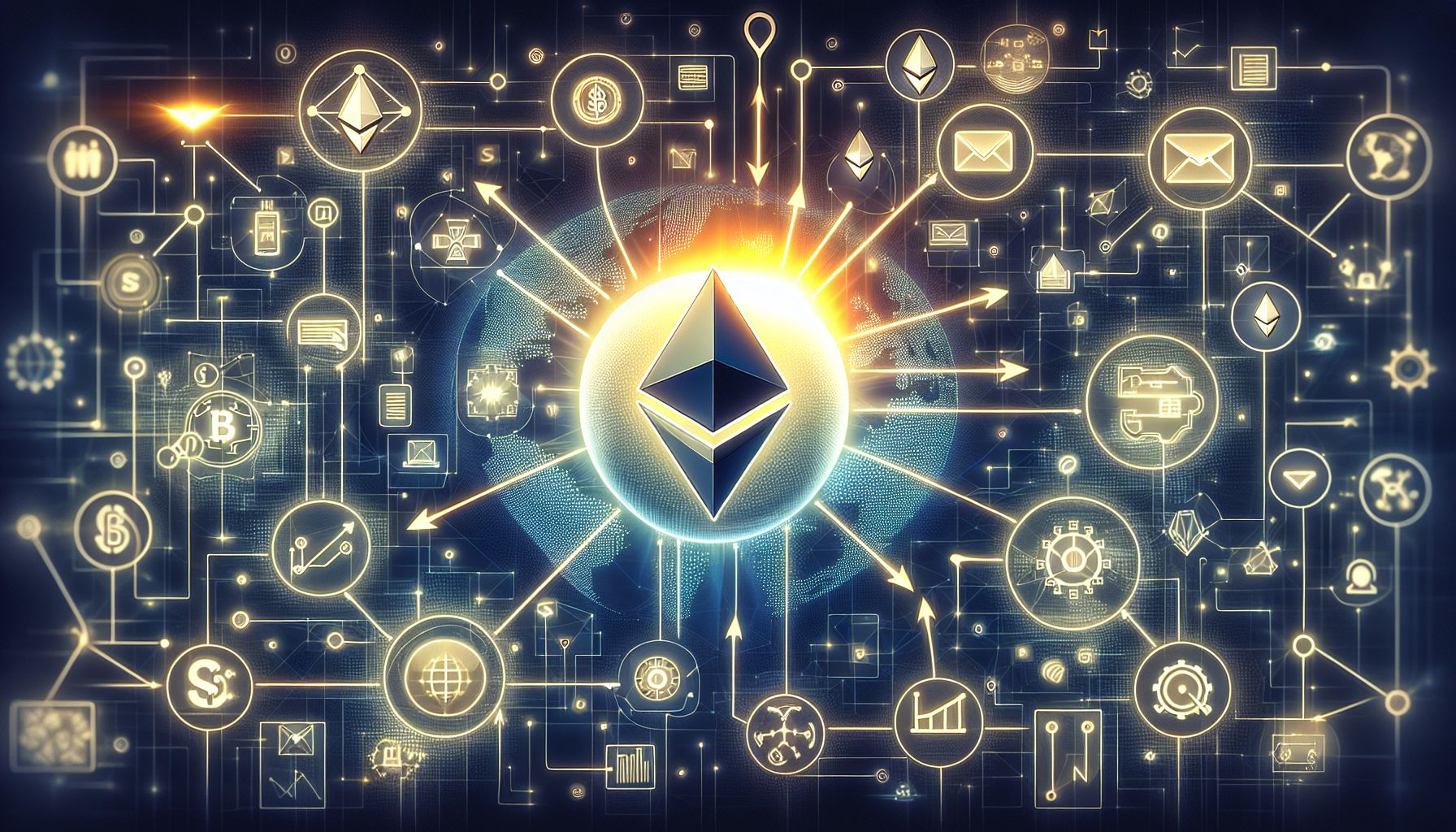
Among the numerous budding blockchain platforms for decentralized finance (DeFi), the Ethereum ecosystem distinctly has the lead role. Ethereum spearheads a revolution, demystifying financial transactions and infusing unimagined control to the stakeholders. This post encapsulates the intriguing structure of Ethereum’s DeFi ecosystem.
Introduction
Ethereum DeFi has remarkably changed conversations around the global finance landscape, rendering conventional banking systems obsolete. From completely easing out intermediaries to enhancing loan and credit accessibility, it is transforming the financial sector. With over $40 billion currently locked in DeFi protocols on the Ethereum network, the platform has facilitated a spiraling trend of financial freedom.
Body
Structure of Ethereum’s DeFi Ecosystem
The Ethereum ecosystem comprises a series of smart contract-based protocols without any central authority. Being the pioneer in introducing smart contracts, Ethereum permits diverse DeFi apps or dApps. From lending and borrowing platforms to stablecoins, decentralized exchanges (DEXs), derivative platforms, payment networks, and insurance platforms, Ethereum DeFi encompasses all facets of a financial ecosystem.
Key Pillars
One of the fundamental pillars of the Ethereum DeFi ecosystem is DEX, such as Uniswap, SushiSwap, and Curve Finance. These platforms have reintroduced financial services with a decentralized approach, paving the way for peer-to-peer exchanges of cryptocurrencies instead of traditional marketplaces run by intermediaries.
Lending and borrowing protocols like Aave and Compound constitute another vital segment. These platforms offer a decentralized lending market and empowered users to earn interest on their funds or borrow assets without going through a third-party financier.
Ethereum also supports synthetic assets creating platforms such as Synthetix. These platforms allow the creation of crypto assets that mirror the value of assets from other markets, enabling exposure to diverse assets, including stocks, commodities, and indices.
Another intriguing inclusion in Ethereum’s Ecosystem is Stablecoins. Projects like DAI have managed to recreate the concept of money through its dollar-pegged stablecoin, influencing remittances and daily transactions in the DeFi space.
Advancements
Ethereum’s DeFi ecosystem is continuously evolving, with developers around the globe working on improvements and new features. The launch of Ethereum 2.0 seems to be a groundbreaking innovation, focusing on enhancing the scalability, security, and sustainability of the platform. It also aims to facilitate a seamless, faster, and cheaper transaction process.
Conclusion
The Ethereum DeFi ecosystem is a trailblazer, illustrating the true potentials of blockchain in disrupting traditional finance. Its ability to execute transactions without intermediaries fosters financial inclusion globally. However, as appealing as Ethereum DeFi seems, risk and volatility remain the two sides of this coin. Despite this, its modular, open-source, transparent, accessible, and financially lucrative nature marks the dawn of a new decentralized finance era. Undoubtedly, Ethereum DeFi is a beacon of hope for a truly democratized financial future.
Ethereum DeFi’s future seems bright, and being a part of it could mean being part of an evolving financial revolution. However, like all investments, it’s always prudent to thoroughly research and understand each platform’s features and the associated risks. But one thing is clear; Ethereum DeFi is reshaping how the world sees and uses money.
Financial notice (as of 16.10.2026): this article is general information, not financial, investment, tax, or legal advice. Crypto-assets are high risk: you can lose some or all of your money. Rules and products change; always check the official source and, if needed, ask an independent adviser.
Investment risk (as of 16.10.2026): past performance does not predict future results. No return is promised or guaranteed. Do not invest money you cannot afford to lose, and do not invest borrowed money.